
1903–1979
Scholar • Philosopher • Jurist • Journalist
Sayyid Abul A'la Maududi
Founder of Jamaat-e-Islami, author of Tafhim-ul-Quran, and one of the most systematic Islamic thinkers of the modern era.
Quick Facts
Born
25 Sep 1903, Aurangabad
Died
22 Sep 1979, Buffalo, NY
Resting Place
Ichhra, Lahore
Era
20th Century
Jurisprudence
Hanafi
Movement
Jamaat-e-Islami
Works
73+ books
Magnum Opus
Tafhim-ul-Quran
Photo Gallery
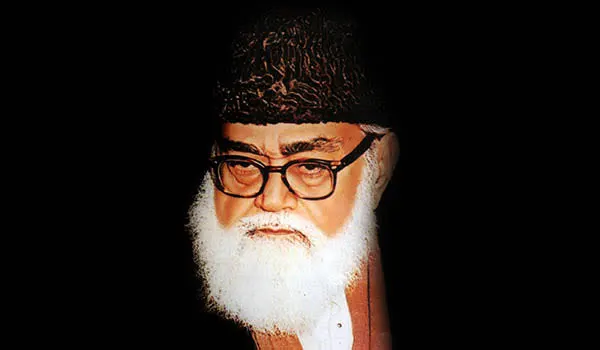
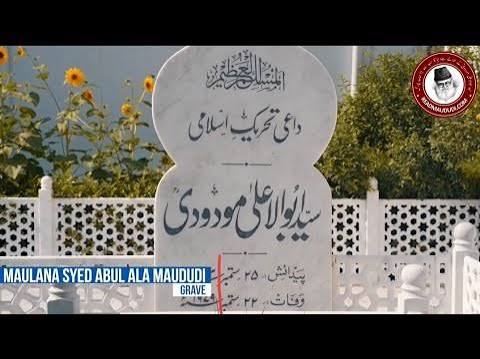
Portrait of Maududi in his study
1 / 3
Life Timeline
Key milestones in the life of one of Islam's most influential modern thinkers.
1903
Birth
Born 25 September in Aurangabad, Hyderabad Deccan, British India. Youngest of three sons of Ahmad Hasan, a lawyer from a family tracing lineage to the Prophet Muhammad (PBUH) through Husayn ibn Ali and Khwaja Moinuddin Chishti.
1909–1918
Early Education
Quran, Persian, Arabic, Urdu, and Islamic law under father's supervision at home. Translated Qasim Amin's 'The New Woman' from Arabic to Urdu at age 11.
1918
First Publication
First published article on electricity in Maarif magazine at age 15. Began journalistic career writing for Bijnore newspaper.
1919–1920
Family Crisis & Self-Study
Father's paralysis and death left family destitute. Abandoned formal education, moved to Delhi, studied English and German, read Western philosophy intensively for five years.
1920
First Editorial Role
Appointed editor of daily Taj (Jabalpur) at age 17.
1921
Advanced Studies
Studied Arabic under Maulana Abdul Salam Niazi in Delhi. Appointed editor of daily Muslim. Began Dars-e-Nizami curriculum.
1925
Principled Resignation
Appointed editor of Al-Jamiat (Delhi). Resigned when Jamiat aligned with Indian National Congress — a principled stand against composite nationalism.
1926
Formal Certification
Earned Sanad of Uloom-e-Aqliya wa Naqliya from Darul Uloom Fatehpuri, Delhi.
1927
Breakthrough Work
Published Al-Jihad fil Islam (600 pages) at age 24. Allama Iqbal praised it as 'the best explication of jihad in any language'.
1928
Hadith Certification
Received Sanad in Jami al-Tirmidhi and Muwatta Imam Malik from Darul Uloom Fatehpuri, Delhi.
1932
Tarjuman al-Quran
Launched monthly journal Tarjuman al-Quran from Hyderabad — dedicated to Quranic interpretation and Islamic revivalism.
1933–1937
Political Philosophy
Developed political philosophy: Islam as comprehensive ideology (hakimiyyat Allah), critique of secular nationalism, concept of jahiliyya.
1937
Meeting Iqbal
Introduced to Allama Muhammad Iqbal by Chaudhry Niaz Ali Khan in Lahore. Iqbal invited him to Punjab.
1938
Daru'l-Islam Trust
Moved to Pathankot, Punjab to oversee Daru'l-Islam Trust Institute established on Iqbal's advice.
1941
Founded Jamaat-e-Islami
Founded Jamaat-e-Islami on 26 August in Lahore. First Ameer. Started with 75 members.
1942
Tafhim-ul-Quran Begins
Began writing Tafhim-ul-Quran — his magnum opus, a 6-volume thematic translation and commentary. Work continued for 30 years.
1947
Partition & Reorganization
Partition of India. Jamaat split along new borders. Maududi opposed partition as violating Islamic ummah unity.
1948
Islamic Constitution Campaign
Campaign for Islamic constitution in Pakistan. Issued fatwa on jihad in Kashmir; imprisoned by Pakistani government.
1953
Anti-Ahmadiyya Agitation
Sentenced to death by military court; commuted to life imprisonment, then overturned by Supreme Court after international pressure.
1956
Constitutional Victory
Pakistan's first Constitution adopted — Objectives Resolution made preamble; Maududi's constitutional ideas partly incorporated.
1958
Martial Law & Imprisonment
Jamaat-e-Islami banned by Martial Law Administrator Ayub Khan. Maududi imprisoned; released 1964.
1961
Muslim World League
Founding member of Rabitat al-Alam al-Islami (Muslim World League), Mecca.
1964
Imprisonment Again
Imprisoned again under Ayub Khan; released same year after public pressure.
1971
Bangladesh Crisis
Bangladesh Liberation War crisis. Relinquished authority to East Pakistan Shura.
1972
Magnum Opus Complete
Completed Tafhim-ul-Quran after 30 years (1942–1972). Resigned as Ameer of Jamaat-e-Islami in October.
1973
Later Works
Published Tajdeed-e-Ihya-e-Deen and continued writing on Islamic civilization.
1979
Passing
Passed away on 22 September in Buffalo, New York. Buried in Ichhra, Lahore. His funeral drew hundreds of thousands.
Major Works
A selection of his most influential publications spanning over five decades.
1942–1972Magnum Opus
Tafhim-ul-Quran
6-volume thematic translation and commentary (1942–1972). His magnum opus presenting the Quran as a comprehensive guide for life.
1927
Al-Jihad fil Islam
600-page treatise published at age 24. Allama Iqbal called it the best explication of jihad in any language.
1941–1972
Khutabat
Multi-volume collection of speeches and addresses to Jamaat-e-Islami members spanning decades.
1955
Islamic Law and Constitution
Systematic presentation of Islamic constitutional theory and its application to modern governance.
1948
The Islamic Way of Life
Comprehensive overview of Islam as a complete system covering belief, worship, ethics, and social order.
1976
Human Rights in Islam
Articulation of Islamic human rights framework predating the UN Declaration by decades.
1977
Four Basic Quranic Terms
Seminal work explaining Ilah, Rabb, Ibadah, and Deen — foundational concepts of Islamic theology.
1978
Let Us Be Muslims
Collection of Friday sermons calling Muslims to live by the comprehensive demands of their faith.
Intellectual Legacy
Core concepts that shaped modern Islamic political thought and continue to influence scholars worldwide.
Hakimiyyat Allah
Sovereignty of God — Islam as a complete ideological system governing all aspects of life
Jahiliyya
Concept that societies not governed by divine law live in a state of modern ignorance
Islamic State Theory
Framework for an Islamic political order based on consultation (shura) and divine law
Islamic Economics
Interest-free banking, zakat as fiscal policy, and social welfare as state obligation
Revival of Ijtihad
Independent reasoning to address modern challenges within Islamic legal framework
Islamic Da'wah Methodology
Systematic approach to inviting others to Islam through education and example
Sources & Attribution
Biographical information is drawn from Wikipedia (CC BY-SA 4.0), Encyclopedia.com, Oxford Encyclopedia of Islam and the Muslim World, and official Jamaat-e-Islami biographical records. The timeline synthesizes these authoritative sources.
If you are a rights holder and believe content should be removed or attributed differently, please contact us.
Explore His Works
Browse the complete library, read books online, or chat with AI about Maududi's writings.